
Hopkins County Arrest Warrants Explained
An arrest warrant authorizes an officer to take a person into custody once the law's required showing has been made. A magistrate reviews the complaint or affidavit behind it. The case may sit in a district court, the County Court at Law, or a lower court. No single Hopkins County office holds every arrest warrant. So start with the court named on the notice. The Sheriff can explain service and booking. The issuing court alone explains the case, the next setting, and any recall process.
Hopkins County Arrest Warrant Clerks
Felony files sit with the District Clerk. Misdemeanors go to the County Court at Law. The District Clerk page lists criminal deputy contacts and the county's criminal-record contact route, and the County Court at Law page links to its docket route. A Hopkins County Class C or traffic matter belongs with a JP or municipal clerk instead. Confirm the right custodian first.

The public clerk page is a contact source, not a complete warrant search.
Inside a Hopkins County Arrest Warrant
A Hopkins County court file may hold more detail than a booking row. Ask for the cause number and any public affidavit. No sample cause-number format is published.
| Warrant number | Format not published; it may differ from the cause number. |
|---|---|
| Issuing court | Names the court and clerk responsible for the case record. |
| Complaint or affidavit | Sworn material that supports the request for process. |
| Offense and statute | Identifies the charge or legal code in the record. |
| Bond and service | May show bond type, amount, issuing date, or execution return. |
| Recall or redaction | Later court action and access limits may affect the copy. |
The County Court at Law page supplies local docket context for its own cases.
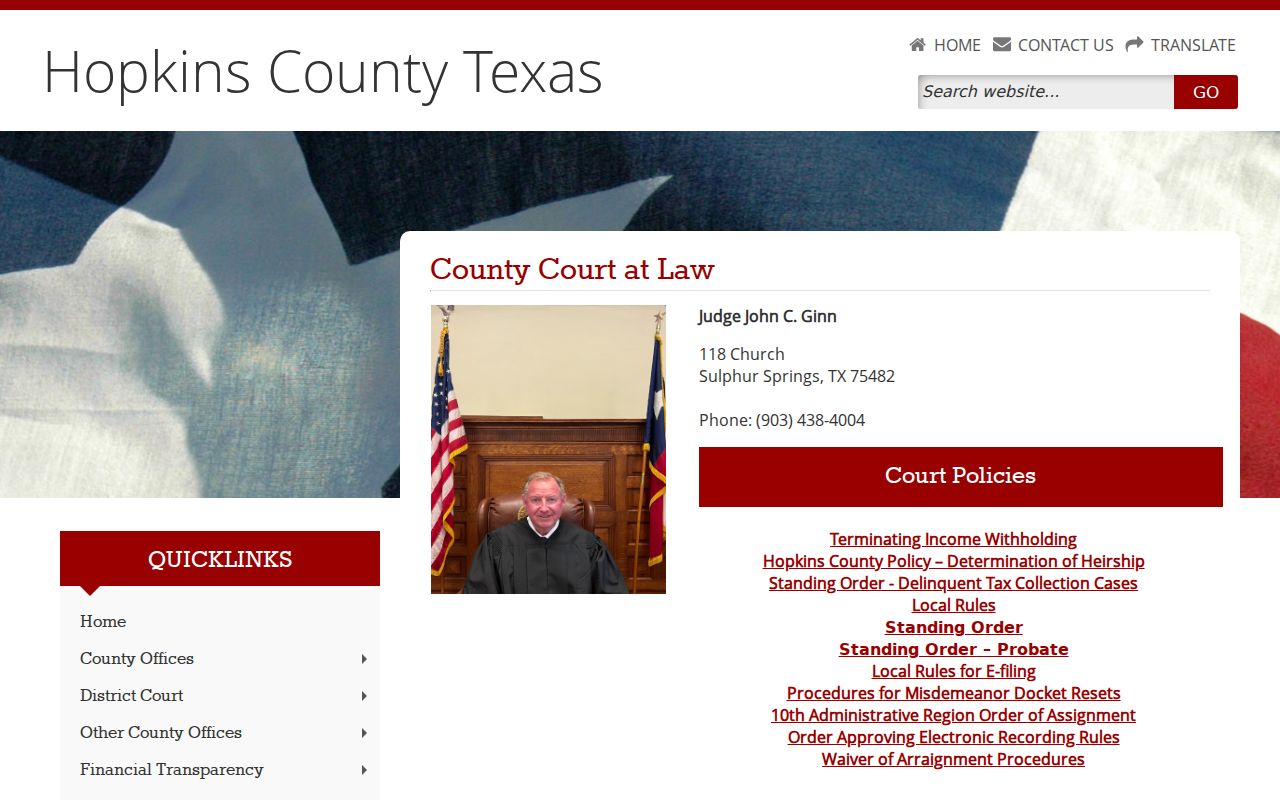
Not every docket line is the warrant itself. Ask the Hopkins County clerk whether the warrant document is held elsewhere.
Hopkins County Executed Warrant Access
Under the Texas Code of Criminal Procedure, Article 15.26 makes an executed arrest warrant and its supporting affidavit public information from the moment the warrant is executed. The magistrate's clerk must supply a copy. Limits can still apply. Juvenile confidentiality, a sealing order, personal identifiers, or an active-investigation exception can each restrict what the clerk releases. So name the cause number or the execution date in your request. Request the executed document itself. The full statute is posted at the Texas Code of Criminal Procedure.
Serving Arrest Warrants in Hopkins County
Hopkins County posts no service assignment chart. The Sheriff and the constables are the county's law-enforcement contacts. Sulphur Springs has its own city police. Which officer serves a warrant depends on the process and the agency's assignment, so do not assume each listed agency serves every court's warrant. Ask the issuing clerk which agency holds the process; the county's Sheriff page then gives a public phone and address for booking, custody, surrender, or bond questions.
Hopkins County Federal Warrant Route
Federal warrants skip the Hopkins County Sheriff. It belongs to a separate court system. The U.S. Marshals Service covers the Eastern District of Texas from a Tyler office. But that district has several divisions. A Hopkins County connection does not prove the case sits in Tyler; the Eastern District of Texas page provides courthouse access information.
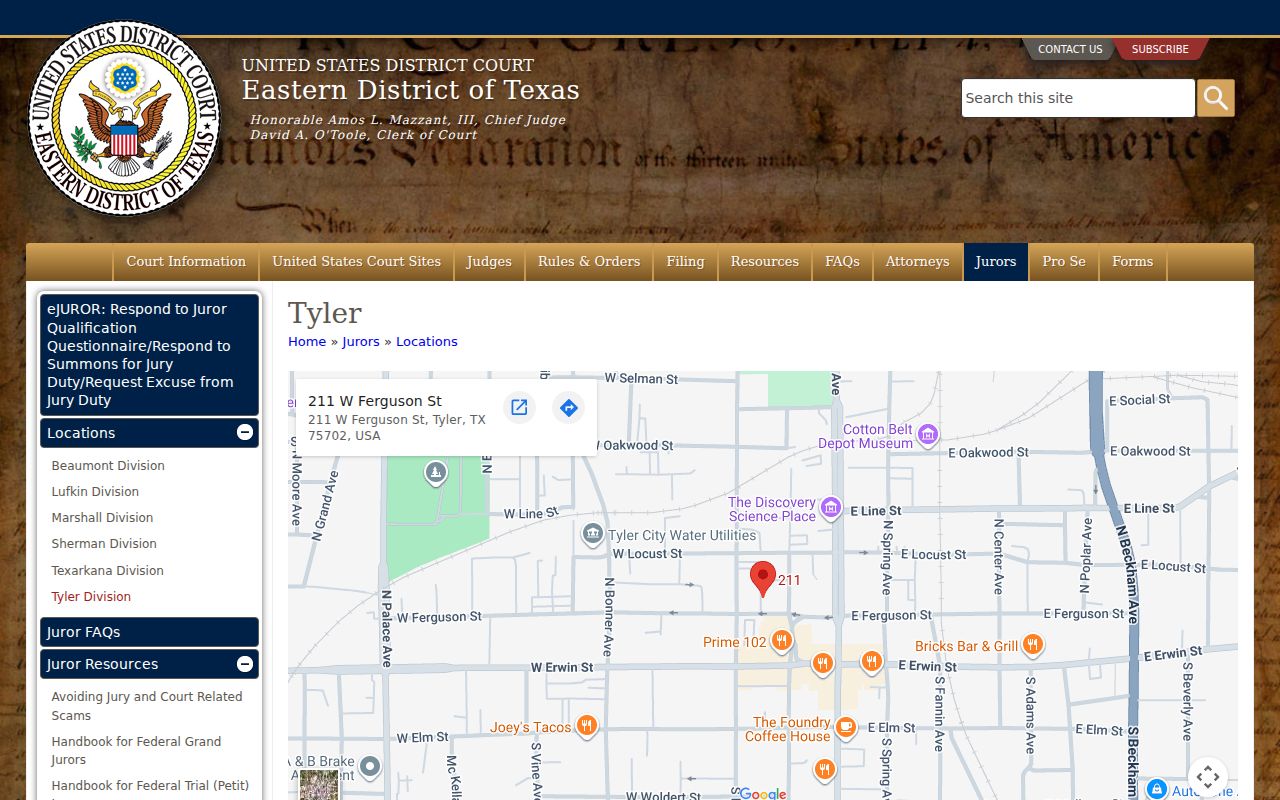
For a Hopkins County federal case, use the official Tyler court page for courthouse details. PACER shows dockets, not everything. Sealed filings may not appear in its public searches.
Comparing Arrest, Summons, and Bench Warrants
A summons or citation just directs someone to appear. A bench warrant follows a court event. An arrest warrant requires the legal review first, and a Hopkins County booking page label does not settle which case or court controls.
| Process | Usual purpose | First Hopkins contact |
|---|---|---|
| Arrest warrant | Authorizes arrest on the required legal showing | Issuing court or clerk |
| Summons or citation | Directs a person to answer or appear | Court printed on the paper |
| Bench warrant | Responds to a missed appearance or order | Court that set the case |
Hopkins County Arrest Booking Limits
The current Hopkins County inmate page shows booking fields like arrest date, agency, count, statute, warrant number, and bond. That is not a full court file. It is not a list of unexecuted warrants either. Ask the clerk for the court record and the Sheriff for custody details. If a record is withheld, ask again. The Texas Public Information Act lets you request any segregable public portions of the file.
- Executed
- The warrant has been carried out by arrest or service.
- Affidavit
- A sworn statement submitted to support a legal request.
- Magistrate
- A judge with authority to review specified criminal process.
If There's an Arrest Warrant for You
Confirm the court and process type first. An encounter can turn into an arrest. A licensed Texas attorney can advise you on a voluntary surrender, bond, or a court filing. The Hopkins County Sheriff explains booking logistics, but only the issuing court can explain the case or recall the warrant.
Before you go: Call the issuing clerk and Sheriff, ask what to bring and where to report, and get counsel when possible.
Keep the citation or cause number, written instructions, and any receipt or signed recall order. A Hopkins County call alone changes nothing.
Questions Before a Hopkins County Warrant Appearance
Ask whether the warrant is still active and which court issued it. Get the cause number. Ask whether a hearing or motion is available. If bond is involved, ask the Sheriff or the clerk about accepted bond types, posting timing, and where to post. Hopkins County publishes no universal surrender schedule. For a record copy, make a written request to the correct custodian; for case-specific legal advice, speak with counsel. A court receipt beats an old booking entry.