
Hopkins County Bench Warrants Explained
A bench warrant in Hopkins County starts with something a judge ordered you to do. Miss a docket call, ignore a court order, fail to pay, or land in contempt, and the court can issue further process. Five courts may hold the file: the County Court at Law, JP1, JP2, Sulphur Springs Municipal Court, and Cumby Municipal Court. A jail booking feed may tag the paperwork as a "Bench Warrant." Look past that label. The court name and cause number tell you far more, because the issuing judge alone controls a reset, a recall, or any other move in the case.
Hopkins County JP Warrant Dockets
JP1 and JP2 are separate Hopkins County courts with separate phone numbers and citation files. JP1 sits at 128 K Jefferson Street. JP2 is at 128 G Jefferson Street. Both are in Sulphur Springs, open weekdays from 8:00 a.m. to 4:30 p.m., with an after-hours payment drop box. Read the precinct on your citation before you pick a clerk. The JP1 page posts its contacts and payment route.
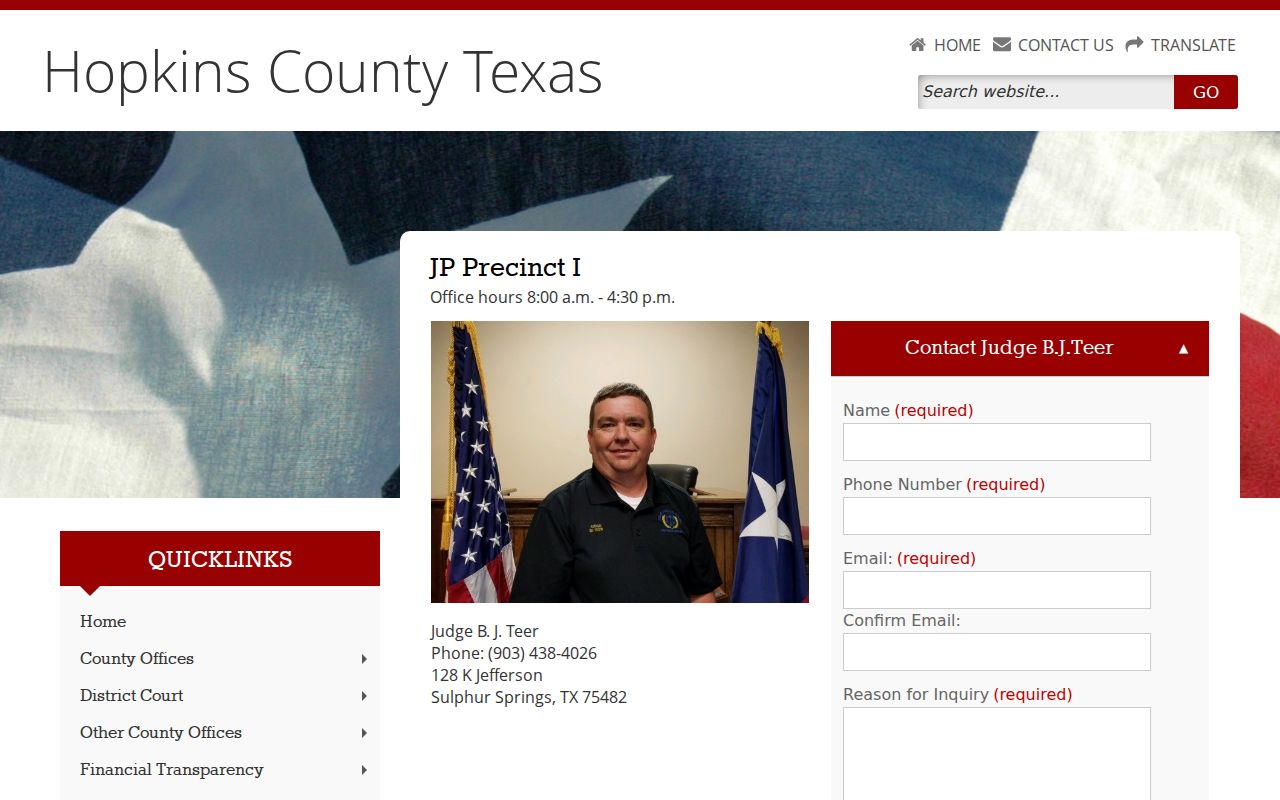
The JP2 page provides a separate clerk and citation contact.
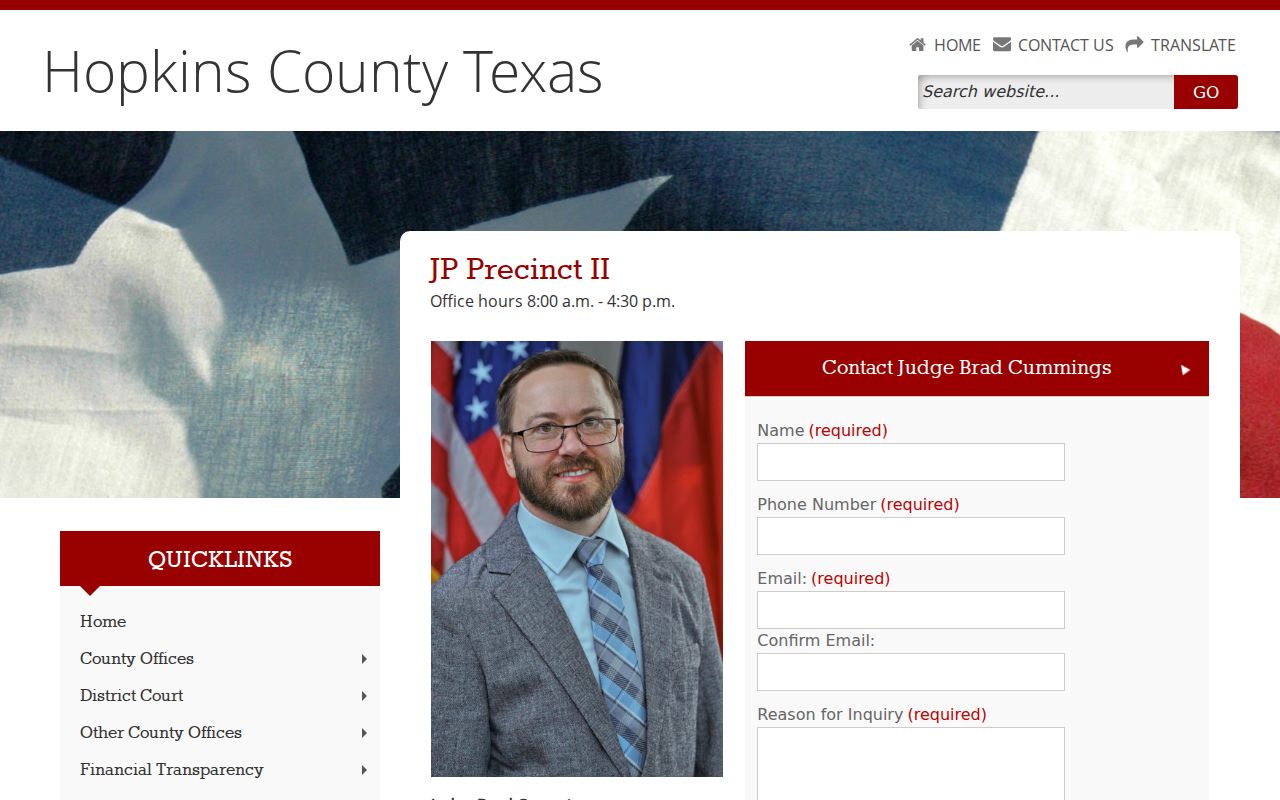
Both Hopkins County JP office pages warn that online or card payments may carry a service fee. The drop box takes after-hours payments only. It is not a warrant desk, and a payment there does not guarantee a same-day recall.
How Hopkins County Bench Warrants Are Issued
Every Hopkins County bench warrant traces back to a court obligation. Show up for a setting, follow an order, or answer a fine-related process; that is where it begins. When a warrant surprises you, call the clerk first. The clerk can read the docket and tell you which event triggered it and which judge issued the process. A countywide web search will not surface every lower-court file, because Hopkins County posts no public warrant roster. For justice and municipal courts, Texas Chapter 45A governs Class C matters and capias pro fine process. The recall path differs from case to case. Ask the court which rule applies rather than assuming one fix fits every bench warrant.
Hopkins County Warrant Calls Need Court Date
Sulphur Springs Municipal Court is blunt about phones. A call does not count as an appearance, extend a deadline, or protect your rights. It can still help. Use a call to identify the citation, the payment route, and your options in Hopkins County. Then ask the clerk whether you need a setting and what formal request the court requires.
Information by phone is not a court appearance. Get the clerk's instructions and follow the required filing or attendance step.
Cumby holds its hearings in person too. The court-date and payment-plan form asks for a citation number and a requested setting, but Hopkins County readers should know the court itself must process it before anything happens.
Bench Warrants and Arrest Warrants Compared
Either type can end in an arrest. The trigger differs, though. A Hopkins County bench warrant follows a court event, while an arrest warrant follows a complaint or affidavit plus the legal review that process requires.
| Question | Bench warrant | Arrest warrant |
|---|---|---|
| Common trigger | Missed appearance or order | Complaint, affidavit, and required legal basis |
| First contact | Court that set the case | Issuing court or clerk |
| Hopkins County record | JP, Municipal, County Court at Law, or district docket | Depends on the alleged offense and court |
| Possible next step | Reset, recall request, payment, or appearance | Counsel, bond, magistration, or case response |
Hopkins County Capias Pro Fine Recall
A capias pro fine is lower-court process aimed at enforcing a fine and costs, and only after statutory steps have run. It is not a catch-all label for every bench warrant. Chapter 45A builds in recall and hardship protections. Under Article 45A.104, a court may recall a capias pro fine before execution in certain circumstances, such as a request for a hearing or a voluntary appearance made with a good-faith effort. Read the current Texas Chapter 45A text for yourself. Then ask the JP or Municipal Court clerk in Hopkins County how the law fits your case. A clerk can walk you through local filing steps. An attorney can advise on strategy.
Resolving a Hopkins County Bench Warrant
Paying alone rarely settles a Hopkins County bench warrant. Ask the court what it will accept. Options can include a payment plan, community service, an indigency review, a new setting, or a motion to recall or quash the warrant. Hopkins JP materials spell out the payment-plan and community-service routes. Sulphur Springs warns that a mailed payment keeps the warrant active until the court receives and posts it. Skip the jail at first. Call the issuing clerk instead, and reach the Sheriff at (903) 438-4040 to talk through a voluntary appearance and bond. The county posts no walk-in surrender schedule, and no bond amount fits every case.
Cumby Hopkins County Warrant Hearings
Cumby Municipal Court, in Hopkins County, gives defendants several ways to handle a case short of appearing in person. Its published forms cover payments, compliance, deferred disposition, and requests for a court date. The payment-plan form wants specifics: the name exactly as it reads on a driver license, the license number, the citation number, an address, a phone, the plea or setting being requested, a date, and a signature. A $50 money order is due per violation. Filling it out guarantees nothing, though. A judge still decides whether to grant the plan or recall a warrant, and only the court can make that call. The court keeps doors open Monday through Friday, 8:00 a.m. to 5:00 p.m., closing for lunch from 12:30 to 1:30. Before mailing a money order or any paperwork to this Hopkins County court, call ahead and confirm the current form and hours. The court's own page carries contact details, hearing information, payment options, and form links. It does not offer a public warrant search.
Finding the Court That Issued the Warrant
Pull out the citation, notice, or docket number first. That paper tells you which Hopkins County clerk holds the file. A felony goes through the District Clerk. Misdemeanors sit with the County Court at Law, while a Class C or traffic case may belong to a JP or the Municipal Court. The County Court at Law page links to its docket route and coordinator information. Lost the paperwork? Call the courthouse or the Sheriff and ask which clerk can route the inquiry. Share a name and date only through a verified office channel, never anywhere else.
Hopkins County Warrant Bond Questions
Bond is about getting out of custody while a case moves forward, nothing more. Hopkins County treats it that way too. The Bail Bond Board procedures set one firm limit: no bonds are taken from 1:00 to 4:00 p.m. on Wednesdays and Saturdays, since that block is reserved for visitation. Treat that as a restriction, not a full schedule for the jail's bond window. Before you post anything, ask the Sheriff or the issuing court what the bond amount is, what types they accept, where to post, and when the next hearing falls. The Bail Bond Board page links to the county's own procedures.
Hopkins County tip: keep the court's receipt or recall order, and ask when other offices will see the update.
Which Hopkins County Court Issued It
When a Hopkins County clerk confirms a warrant, get the details in full. That means the court, the cause number, the process type, whether the warrant is still active, and the next step required of you. Municipal and JP matters raise one more question: ask whether a payment plan or a hearing can change the warrant. On a county or district matter, the clerk can steer a recall request or a new setting to the right judge. The Hopkins County warrant overview maps out the court and Sheriff contacts. If arrest may follow, talk with a licensed Texas attorney before you arrange a surrender.